Surrealist Artists' Books Go On Display
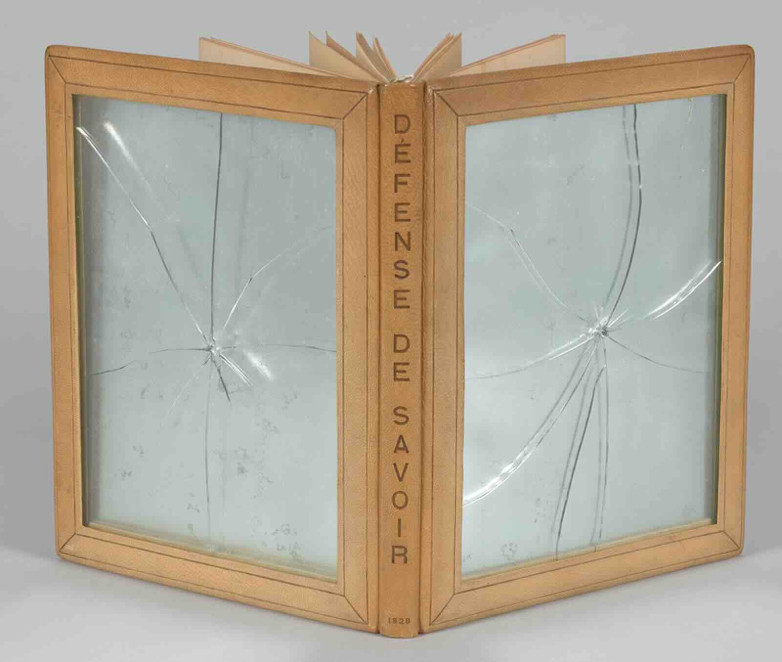
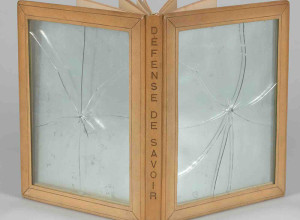
Défense de savoir (Knowledge Forbidden), by Giorgio de Chirico (artist) and Paul Éluard (author), binding by Georges Hugnet and Louis Christy, published 1928, rebound 1936.



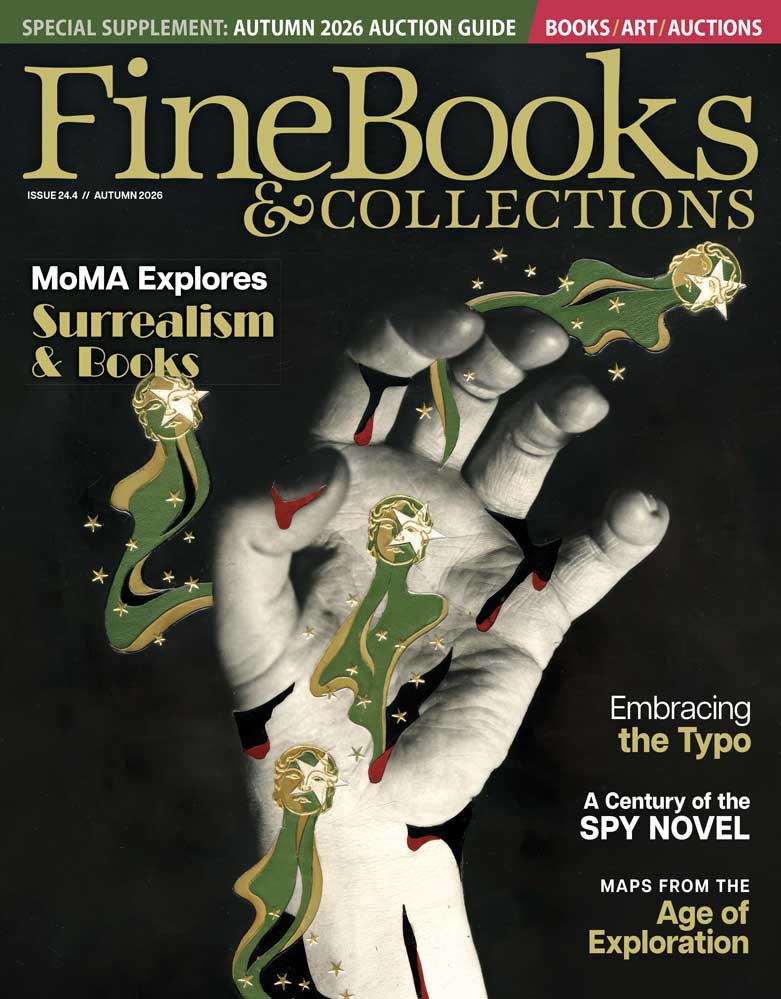
The Surrealist Book: Tomorrow Lives in Mirrors at The Museum of Modern Art in New York will showcase the impact of artists’ books within the Surrealist movement.
On view at MoMA from October 4 through January 23, 2027, the exhibition will feature a selection of rare volumes produced by Surrealist artists and writers including André Breton, Claude Cahun, Salvador Dalí, Paul Éluard, Max Ernst, and Toyen.
The exhibition presents for the first time at MoMA the gift of artists’ books from Helen and Sam Zell which came to the Museum in 2022. One of the most significant collections of artists’ books formerly in private hands, the Zell Collection comprises approximately 100 works, spanning the period from 1857 to 2014.
Among them are original manuscripts for some of Surrealism’s iconic texts, such as Breton’s Manifeste du surréalisme and Poisson soluble (Surrealist Manifesto; Soluble Fish) (1924), Unica Zürn's private notebook with intricate drawings of hybrid animal-human creatures, and one-of-a-kind bindings by Georges Hugnet incorporating materials like liquid mercury and shattered glass.
Other highlights include
- the partnership between Dalí, Breton, and Éluard in the 1930 L’Immaculée conception
- frottage rubbings Ernst made for Mr. Knife, Miss Fork (1931) and Je Sublime (I Sublime, 1936)
- kaleidoscopic photomontages in Cahun and Marcel Moore’s Aveux non Avenus (Cancelled Confessions, 1930)
- solarized nudes by Man Ray that merge with Éluard’s love poems in Facile (Easy, 1935)
- the transformation of succulent plants into mutating forms in Yoshio Shimozato’s Mesemu zoku; Chōgenjitsushugi shashinshū (Genus Mesemb; 20 Surrealist Photographs, 1940)
- dynamic typography in Hugnet and Marcel Duchamp’s La septième face du dé: Poèmes-découpages (The Seventh
Face of the Die: Collage Poems, 1936) - A Toute Épreuve (Proof Against All, 1958) featuring Joan Miró’s colorful biomorphic woodcuts floating playfully around Éluard’s lyrical poems
“At its most quintessential and exquisite, the Surrealist book combined the literary, artistic, and political in a way that no other object could, and enabled the spread of Surrealist thought in a way that no other vehicle would.” said exhibition co-organizer Jodi Hauptman, The Robert Lehman Foundation Chief Curator of Drawings and Prints.